

Sacred House Cappadocia- A Living Museum of Myth, History, and the Human Soul
Written by: Coral Isikci, Staff Writer

Set within the historic landscape of Cappadocia and built upon 2,500-year-old ruins, Sacred House is an extraordinary convergence of archaeology, mythology, and imagination. With special approval from the Turkish Ministry of Culture, the artifacts uncovered during excavation were not removed or archived. They were preserved, restored, and reintegrated into the property itself. Ancient stones, fragments of civilizations long past, and relics dating back thousands of years are embedded into the walls, the rooms, and the corridors, creating an environment where history is not observed, but inhabited.
From the very first moment inside, the experience becomes immersive. The light dims, textures deepen, and the outside world begins to dissolve. There is a quiet sense of entering a different rhythm of time. As the hotel manager Ms. Funda Oz shares, “Sacred House is a living experience where history, art, mythology, and the human spirit intertwine… inviting people into a sensory and emotional journey.”

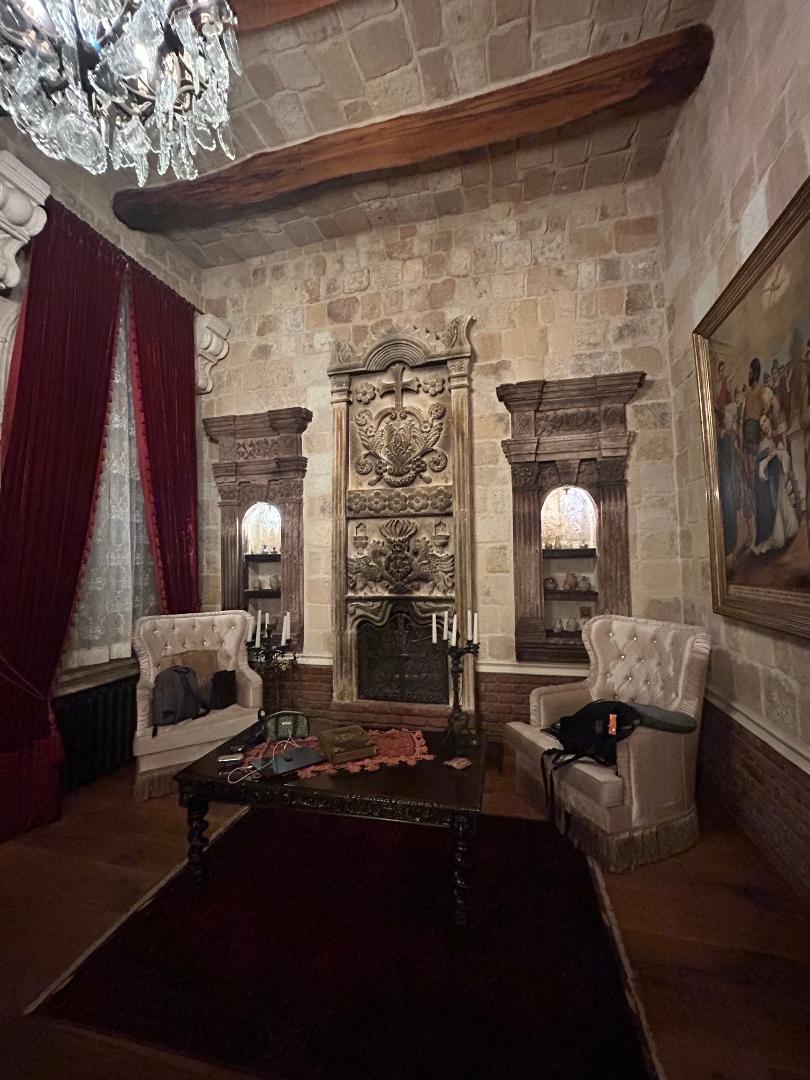
At the heart of Sacred House lies a powerful conceptual framework inspired by Dante’s Divine Comedy, a literary masterpiece that traces the journey of the human soul through Inferno, Purgatorio, and Paradiso. This philosophical structure is not merely referenced; it is spatially realized throughout the property.
The hotel is designed as a multi-dimensional world, a vertical narrative that invites guests to move through symbolic realms:
At the highest level, the heavenly celestial plane unfolds. The restaurant and bar reside here, bathed in a sense of openness and quiet elegance. There is a feeling of lightness in this space: of elevation, clarity, and refinement. It is a place of pause, where the experience softens and expands, coupled with delightful sensory stimulations of palate, art and music.


At the entry level, the in-between realm emerges. This transitional space reflects the intersection of the earthly and the divine, a place where human experience meets something more ethereal. The atmosphere here carries a contemplative stillness, as though suspended between worlds. According to the philosophy of Sacred House, this is where angels descend and interact with humanity, guiding, observing, and shaping the journey.
And then, below, hidden beneath layers of stone and shadow, the Inferno Spa reveals itself.
This is where Sacred House becomes truly unforgettable.


This is not a conventional spa experience. It is immersive, provocative, and artistic: a visceral interpretation of Dante’s Inferno, where intensity and beauty coexist. It is designed not just to relax the body, but to evoke something deeper, something emotional and reflective.
Yet Sacred House is not defined by a single space. Its true brilliance lies in the cohesion of every detail.
The property features approximately 16 individually curated rooms, each conceived as its own narrative world. No two rooms share the same identity. Each one carries its own story, its own emotional tone, its own sense of place.
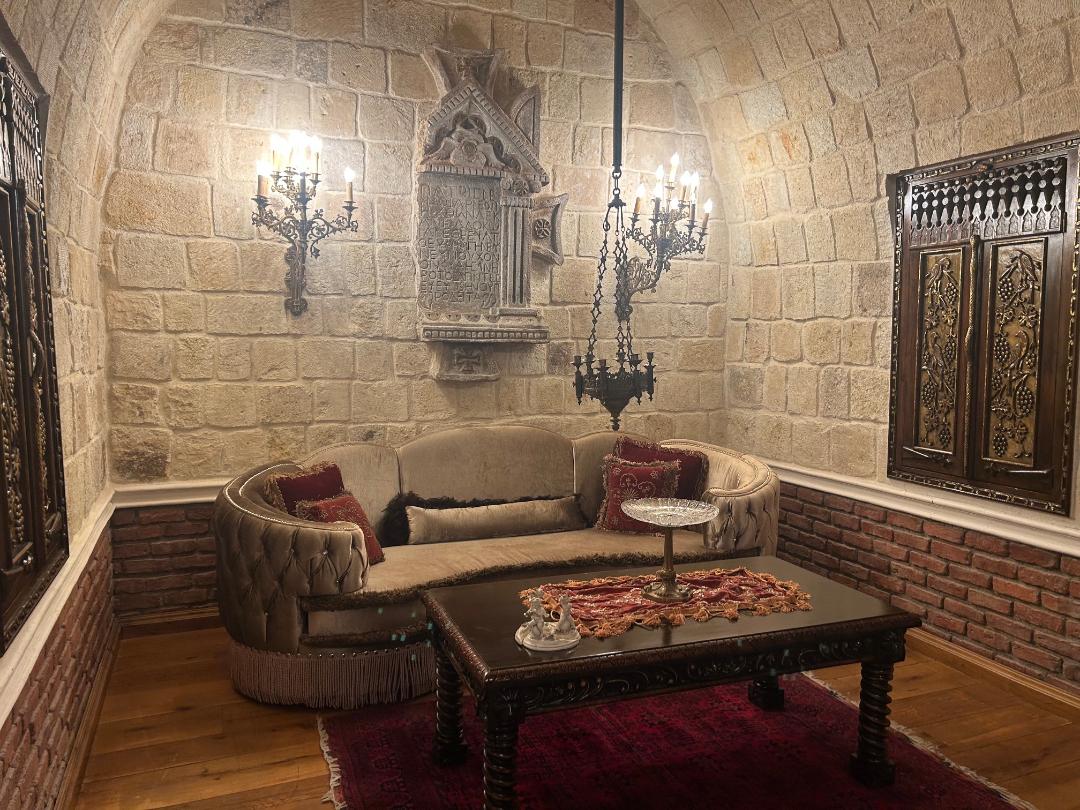

During our stay, we experienced both Sanctuary and Allegory of Jealousy, two rooms that could not be more distinct, yet equally compelling. In Sanctuary, a 1,500-year-old stone tablet from early Byzantine era rests quietly within the room, grounding the space in a sense of permanence and reverence. It feels less like décor and more like presence: something that has endured, witnessed, and remained.
Every element within these rooms, textures, lighting, artifacts, and artworks has been intentionally selected to contribute to a larger narrative. As Ms. Oz explains, “Each room carries its own soul and identity… no room repeats another.” The effect is profound. Guests are not simply assigned a room; they are invited into a story.
Throughout Sacred House, symbolism is layered and deliberate. The interplay between light and shadow, warmth and intensity, stillness and drama reflects a deeper exploration of the human condition. The space invites introspection without ever demanding it. It allows guests to interpret, to feel, and to connect in their own way.
This approach extends to the preservation of history itself. “For us, preserving history does not mean hiding it behind glass,” Ms. Oz shares, “but allowing people to breathe within the same atmosphere.” That philosophy defines Sacred House. It is not about separation between past and present, but about coexistence: an environment where centuries overlap seamlessly.

Sacred House speaks to a particular kind of traveler, one who values meaning as much as beauty, atmosphere as much as comfort. It is a place for those who seek experiences that linger, that unfold gradually, that leave a lasting impression long after departure.
Time behaves differently here. It stretches, softens, and layers itself into the experience. Hours feel longer, moments feel deeper, and the memory of the place carries a weight that is difficult to articulate.
Sacred House does not aim to replicate anything. It stands entirely on its own: bold, imaginative, and deeply intentional.
And once experienced, it becomes something you carry with you.
For more information and reservations, visit https://www.sacredhouse.com.tr/en